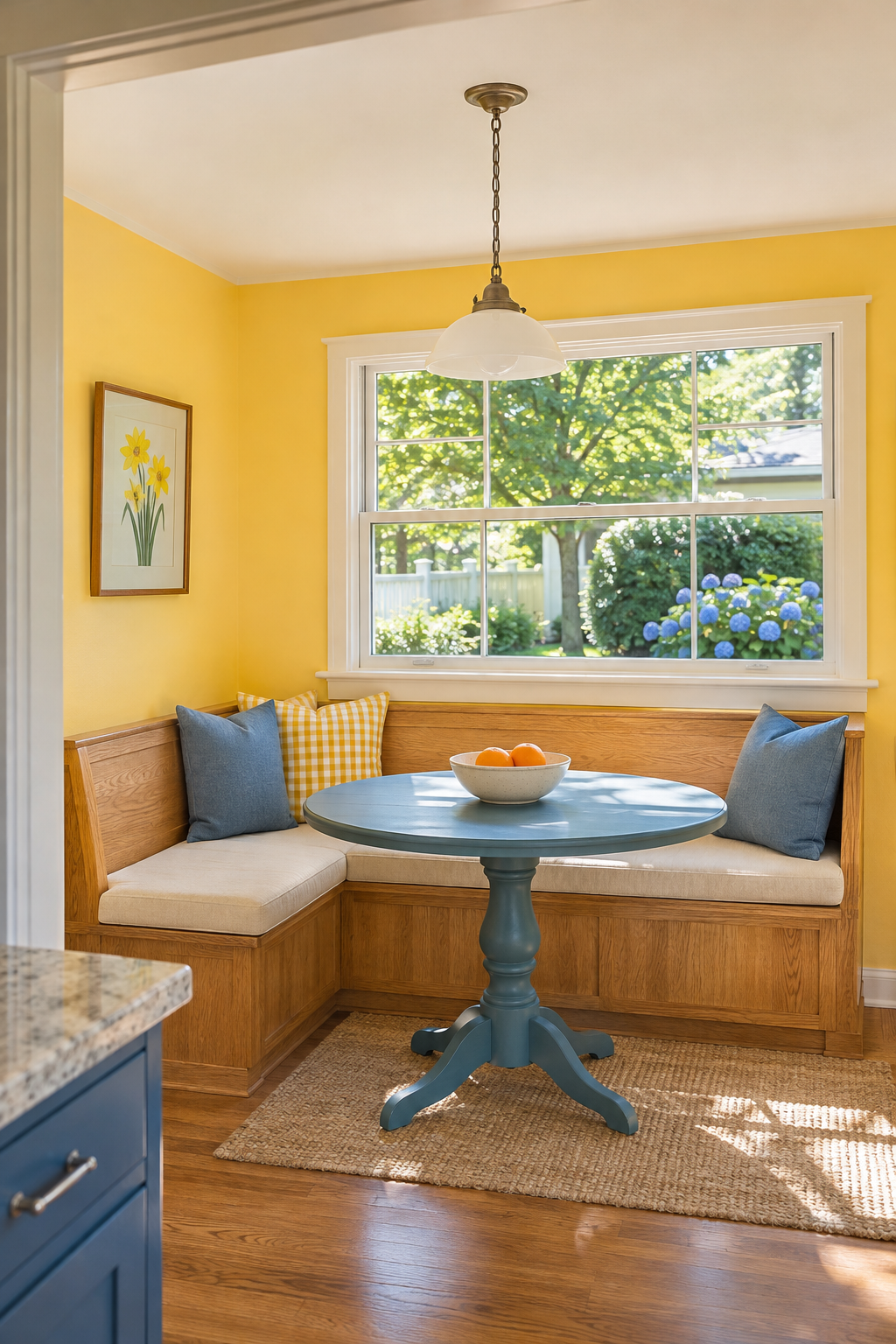
Benjamin Moore · HC-173
Edgecomb Gray on interior walls
- Color family
- Light warm greige
- Digital swatch
- #D9D3C4
Where I’d start
Check how the wall sits behind the room’s warm fabrics. Small swatches can hide that relationship.
See Edgecomb Gray on more walls
See what changes when the room, trim and light are different.
Brick fireplace room
Brick and wall color side by side
Room with oak trim
Warm wood at the edge of the wall
Room with wood built-ins
Wall color against existing wood grain
Same room, three colors
Start at the edge where the wall meets the existing finish. Then step back and compare the whole room.
Edgecomb Gray
Benjamin Moore · HC-173Wall color beside bedding and wood.
Pale Oak
Benjamin Moore · OC-20Pale Oak takes the wall a step lighter.
Revere Pewter
Benjamin Moore · HC-172Revere Pewter adds depth. Compare it in the shadowed side of the room.
How we compared them. Recoat applied each named paint to the same prepared wall area of an illustrative demo photo. Each view uses the same framing and original finishes around the painted area.
Before you pick a sample
Choosing between shades?
Is Edgecomb Gray closer to beige or gray?
Use your room to settle it. Try it beside white trim and warm bedding, then compare with a lighter and a deeper greige. The edge against the trim usually makes the distinction easier.
See Pale Oak in its own guideBefore you buy a gallon
Three checks to make where you’ll actually paint.
Start with the hardest spot
Start where the wall meets the finish you’re keeping.
Compare generous samples
Set Edgecomb Gray and your closest alternative next to each other on separate sample boards.
Look in different light
Look once by the window and once with your usual lamps on.